The Bridge Factor: The One Aviator Measurement Most People Have Never Heard Of (But Absolutely Should)
Ask most people what to look for when buying aviator sunglasses and you'll hear the same answers: frame width, lens size, maybe the material. Rarely will anyone mention the bridge. Which is a shame, because the bridge measurement is arguably the single most important number on a pair of sunglasses — and almost nobody pays attention to it until something goes wrong.
If you've ever worn a pair of aviators that slid down your nose constantly, sat crooked on your face, or left red pressure marks on the sides of your nose after an hour, the bridge is almost certainly the culprit. And if you've ever tried on a frame that felt mysteriously, inexplicably perfect the moment it touched your face — that was the bridge too.
Let's fix this knowledge gap.
What the Bridge Measurement Actually Means
The bridge measurement refers to the distance in millimeters between the two lenses — specifically, the gap that spans the nose. On a standard sunglass spec sheet, it appears as the middle number in the three-number sequence printed inside most frames. So if you see "58-14-135," that's 58mm lens width, 14mm bridge, and 135mm temple length.
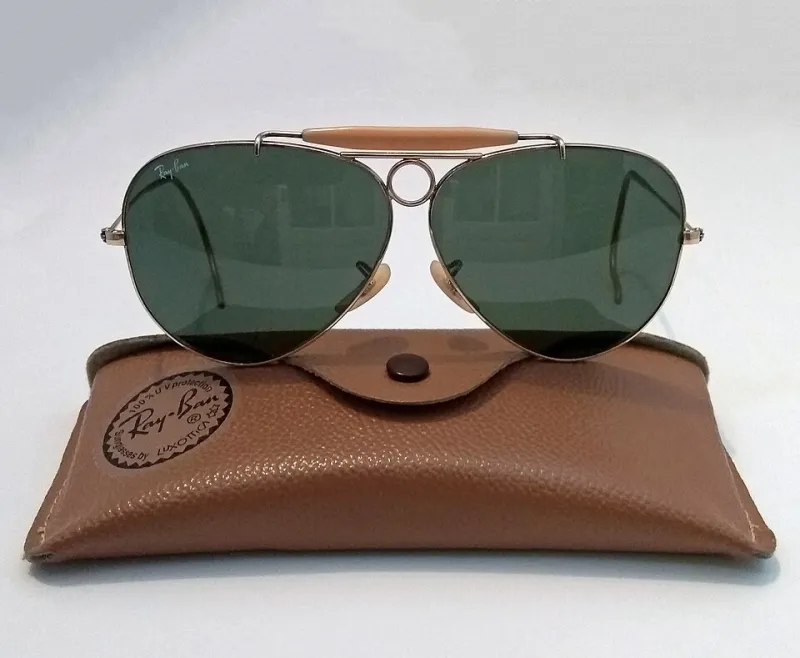
For aviators specifically, the bridge does something slightly different than on other frame styles. Because aviators use a double-bridge construction — that distinctive double bar that runs across the top of the frame — the bridge measurement interacts with the overall frame geometry in a unique way. The double bridge distributes weight differently than a single bridge, which is part of why aviators are historically comfortable for extended wear. But if the bridge width doesn't match your nose, that distribution goes sideways fast.
The History Behind the Design
This is worth a quick detour. When Bausch & Lomb developed the original aviator frame for the US Army Air Corps in the 1930s, they weren't just designing for style. They were solving an engineering problem: how do you create a sunglass that stays stable on a pilot's face during high-G maneuvers, temperature extremes, and hours of continuous wear?
The double bridge was the answer. It created a rigid upper structure that distributed weight across a wider area of the nose, reducing the pressure points that caused discomfort during long missions. The cable temples that looped around the ear added stability from behind. The whole design was a study in functional fit — and the bridge measurement was central to it.
When aviators transitioned from military equipment to civilian fashion in the postwar decades, that functional precision largely disappeared from the consumer conversation. People started choosing frames based on how they looked on a display stand rather than how the bridge fit their specific nose anatomy. The result? A lot of ill-fitting sunglasses and a lot of people who assumed aviators just weren't comfortable for them.
What Your Bridge Width Says About Your Face Shape
Here's where it gets interesting. Bridge fit isn't just about nose anatomy in isolation — it's deeply connected to overall face proportions. The relationship between your nose width, the space between your eyes, and your overall face width determines what bridge measurement will work for you. And that relationship tends to cluster around face shape categories in predictable ways.
Narrow bridge (12mm-14mm): Tends to suit faces with closer-set eyes and narrower nose profiles. Often works beautifully on oval and heart-shaped faces. A narrow bridge holds the frame higher on the nose, which affects how the lens sits relative to the eye — this can actually improve the field of vision for some wearers.
Standard bridge (15mm-17mm): The most common range, designed to fit the statistical average of American nose widths. Works across a wide variety of face shapes but is genuinely perfect for fewer of them than the industry would like to admit.
Wide bridge (18mm+): Suits faces with wider-set eyes, broader noses, or flatter nose bridges — characteristics that are more common in certain ethnic backgrounds and that the mainstream eyewear industry has historically underserved. A wide bridge sits lower on the nose and angles the frame slightly differently, which changes the entire geometry of how the aviator looks on the face.
Find Your Bridge: A Quick Diagnostic
You don't need an optometrist for this — though we'll get to why you might want one in a minute. Here's a simple self-assessment:
Step 1: Check your current frames. Find the three-number sequence inside any glasses or sunglasses you own that fit well. Note the middle number. That's your baseline bridge measurement.
Step 2: Look at where your current frames sit. Do they rest on the widest part of your nose, or do they slide to a narrower point? If they slide down, your bridge measurement is probably too wide. If they pinch immediately, it's too narrow.
Step 3: Check the tilt. Put on a pair of aviators and look straight ahead. Are both lenses at equal height? If one side sits lower, your nose bridge isn't symmetrical — which is true for about 65% of people. This is normal, but it means you may need adjustable nose pads, which most quality aviators offer.
Step 4: Assess the eye positioning. In a well-fitted aviator, your eye should sit roughly in the center of the lens, maybe slightly toward the top. If your eye is very close to the bottom of the lens, the frame is sitting too low — a bridge issue. If you're looking through the top quarter of the lens, the bridge is too narrow and the frame is riding too high.
What Optometrists Want You to Know
Eyecare professionals see the downstream effects of poor bridge fit constantly. Beyond discomfort, a frame that sits incorrectly on the nose changes the optical axis — the alignment between your eye and the center of the lens. For non-prescription sunglasses, this is mainly a comfort and vision clarity issue. For prescription aviators, it can actually affect how well the lenses correct your vision.
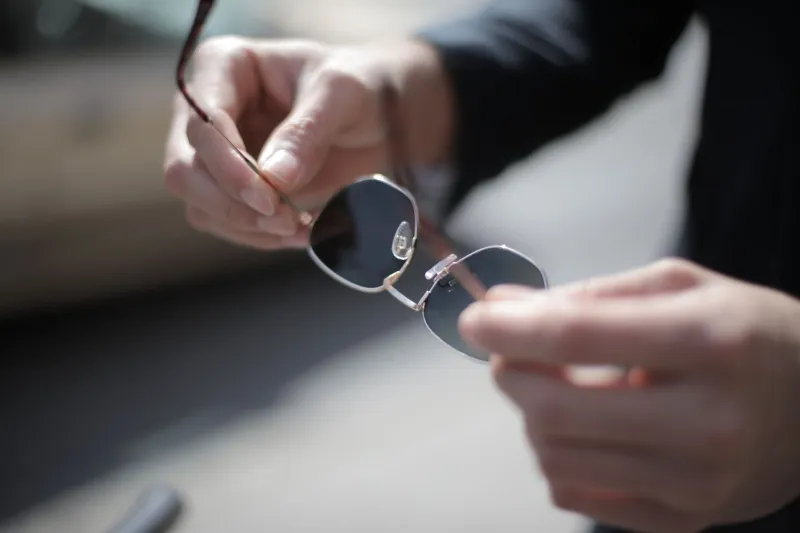
Optometrists also point out that the nose pads on most metal aviators are adjustable for a reason. Those small silicone or metal pads on either side of the bridge can be bent inward or outward by a few millimeters, effectively customizing the fit. Many people buy aviators, find them slightly uncomfortable, and return them — never knowing that a thirty-second adjustment would have solved the problem entirely. Any optical shop will do this adjustment for free, and most will do it even if you didn't buy the frames from them.
Practical Buying Tips for Getting the Bridge Right
When shopping online — which is how most Americans buy sunglasses now — bridge measurement is the number to prioritize. Before you order, check the spec sheet and compare the bridge measurement to frames you already know fit well. Many brands now offer virtual try-on tools, but these don't reliably capture bridge fit because they can't assess nose depth or asymmetry.
If you're shopping in person, put the frame on and resist the urge to immediately look at your reflection. Instead, close your eyes and notice where the pressure is. A well-fitted bridge should distribute weight evenly across both sides of the nose with no single pressure point. Then look in the mirror. Then decide.
The Payoff
Getting the bridge right transforms the aviator experience. Frames that once seemed to have a mind of their own — sliding, tilting, pressing — suddenly stay exactly where they're supposed to. The double-bridge design that pilots relied on in the 1940s works just as well in 2024, but only when the measurement matches the wearer.
It's a small number with a big impact. Start paying attention to it.