Built in the '40s, Bought in 2024: The Strange Secret Behind Aviators' Unbreakable Grip on America
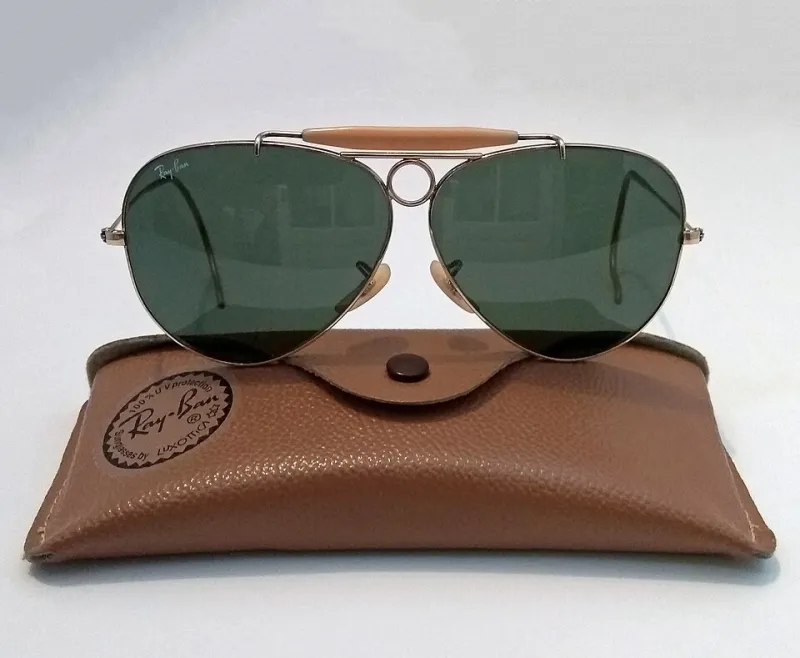
Photo: Francis Flinch, CC BY-SA 4.0, via Wikimedia Commons
Fashion is supposed to be ruthless. Trends rise, peak, embarrass themselves, and disappear. Bell-bottoms had their moment. So did frosted tips, Von Dutch hats, and those tiny rectangular frames that somehow crept back for about eighteen months before everyone collectively agreed to move on. The cycle is fast, unforgiving, and completely normal.
So why haven't aviators gotten the memo?
The teardrop silhouette that military opticians designed for Army Air Corps pilots in 1936 is still the most consistently purchased sunglass style in the United States. Not vintage-popular. Not niche-popular. Straight-up, year-over-year, top-of-the-charts popular. Walk into any eyewear retailer from a Walmart in rural Kansas to a boutique on Rodeo Drive, and aviators will be there — prominently, unapologetically front and center.
That's not an accident. It's a paradox worth unpacking.
The Design That Refuses to Age
Most frame shapes are tied to a decade. You look at a thick plastic cat-eye and you think 1960s. You see a round wire frame and your brain files it under "1970s or Coachella." Shapes carry timestamps.
Aviators don't.
The reason comes down to geometry. The teardrop lens shape is large enough to feel current — oversized eyewear has been trending for years — but structured enough to avoid reading as costume-y. The thin metal frame reads as minimal, which aligns with contemporary design sensibilities. The double bridge, once purely functional, now functions as a visual anchor that gives the frame a sense of intentional detail without veering into busy territory.
In other words, the design accidentally hit every note that modern aesthetics would eventually demand. It wasn't engineered to be timeless. It just turned out that way.
Optometrists point out another practical advantage: the large lens coverage area is genuinely useful. Aviators were originally built to shield pilots from high-altitude UV exposure across a wide field of vision. That same coverage makes them functional for driving, outdoor activities, and everyday wear in a way that narrower frames simply aren't. When something looks good and works well, consumers keep buying it. Simple math.
The Psychology of the "Safe Risk"
Here's where it gets interesting. Fashion psychologists describe what they call the "safe risk" — a purchase that feels bold enough to signal personal style, but familiar enough to avoid social blowback. Aviators sit squarely in that sweet spot.
Choosing an unusual frame is a gamble. Maybe it works, maybe it doesn't. Choosing aviators is different. There's an understood cultural shorthand around them: cool, classic, slightly edgy without being try-hard. When Americans reach for a pair, they're not just buying sunglasses. They're borrowing a set of associations that have been building for nearly a century.
Think about the reference points embedded in the American imagination. Steve McQueen. Top Gun. The highway patrol officer leaning against a cruiser. The rock star backstage. The president stepping off Air Force One. These images don't belong to one era — they span decades and demographics. And in almost every one of them, aviators are present, quietly doing their job of signaling authority, cool, and confidence.
That kind of cultural saturation is nearly impossible to replicate from scratch. It accumulates over generations. And once it's there, it creates a self-reinforcing loop: people wear aviators because aviators look cool, and aviators look cool because people keep wearing them.
How the Frame Survived Fashion's Graveyard
Not every iconic style makes it through the long haul. Fashion graveyards are full of frames that were once everywhere and then vanished — sometimes permanently. Aviators have actually died and come back, which makes their current dominance even more remarkable.
Through the early 1980s, aviators were ubiquitous. Then the decade pivoted hard toward oversized plastic frames and the aviator dipped into relative obscurity. Industry insiders who were working in eyewear retail during that period describe it as a genuine trough — a time when the frame felt dated, associated with a fading aesthetic rather than a living one.
Then came Top Gun in 1986, and the whole trajectory shifted. Tom Cruise's Ray-Ban Outdoorsman frames didn't just sell sunglasses — they re-encoded aviators in the American cultural imagination as aspirational, cinematic, and deeply tied to a certain idea of American cool. Sales spiked. The frame was back.
What's notable is that this revival didn't feel like nostalgia. It felt current. That's the move aviators keep pulling off: they don't return as throwbacks. They return as the real thing, newly relevant for a new moment.
Generation to Generation
Another factor that doesn't get enough credit is inheritance — both literal and cultural.
Aviators are one of the few sunglass styles that genuinely cross generational lines. A Boomer might own a pair they've had since the '80s. Their Gen X kid grew up watching those frames and associates them with a certain parental cool. Millennials absorbed aviators through pop culture references spanning three decades. Gen Z discovered them through vintage aesthetics and found that, unlike some retro looks, these actually translate to modern wardrobes without irony.
This cross-generational fluency means aviators are never just one generation's thing. They belong to everyone, which makes them perpetually accessible to new buyers without alienating existing fans. Try pulling that off with most fashion items.
Retailers in the US have noticed this pattern for years. Entry-level aviators in the $25–$50 range consistently attract younger buyers making their first real sunglass purchase. Premium options in the $200–$500 range pull in established buyers who know exactly what they want. The frame works at every price point and for every buyer stage, which is practically unheard of in a category as trend-sensitive as eyewear.
The Paradox Explained
So what actually explains the aviator paradox — why a design that's pushing ninety years old keeps outperforming everything newer and flashier?
The honest answer is that aviators don't succeed despite their age. They succeed because of it.
Decades of cultural presence have done what no marketing campaign ever could: they've made the frame feel inevitable. Not trendy, not nostalgic — just correct. When Americans look for sunglasses that feel like sunglasses, the teardrop silhouette and thin metal frame are the answer their brain already has queued up. Everything else is a deviation from that default.
Fashion evolves in cycles. Styles come and go, get reclaimed, get discarded. But every now and then, something escapes the cycle entirely and becomes a fixture — not a trend but a constant. Aviators aren't competing with other styles anymore. They've graduated past that.
They're just what American sunglasses look like. And apparently, that's not changing anytime soon.