One Frame, Two Worlds: How Men and Women Wear Aviators Differently — and What It Reveals About American Fashion

Few accessories in American fashion have the kind of cross-demographic pull that aviators do. Walk through any city in the country — New York, Chicago, Austin, Seattle — and you'll see them on men in business casual, women in streetwear, nonbinary folks rocking them with everything from vintage denim to tailored blazers. The frame is genuinely universal in a way that almost no other sunglass style has ever managed.
But here's the thing: universal doesn't mean identical. The way American men and women select, style, and relate to their aviators is actually pretty different — and those differences tell an interesting story about gender, fashion psychology, and where cultural norms are headed.
A Frame Born in a Very Male World
To understand where we are, it helps to know where aviators started.
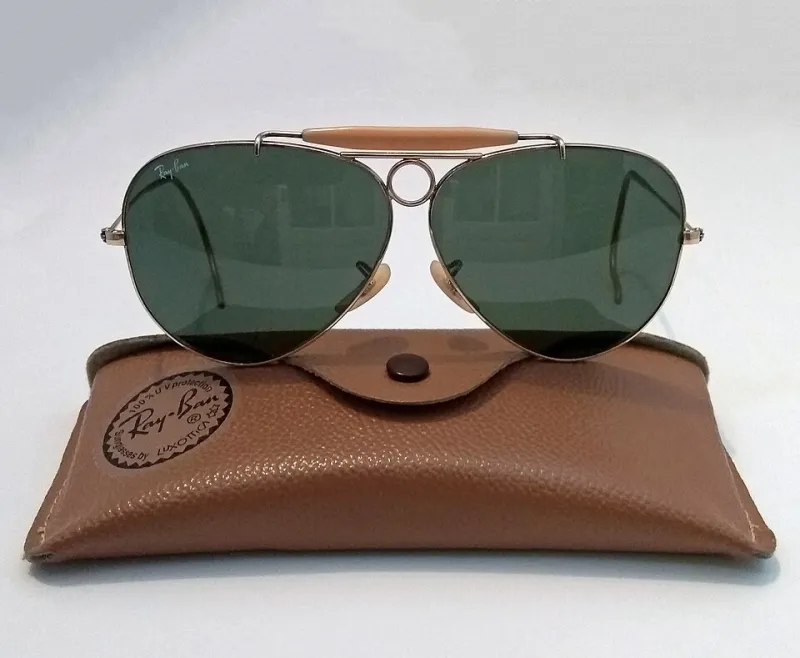
The original Bausch & Lomb aviator was designed in 1936 for US military pilots — a workforce that was, at the time, entirely male. The proportions reflected that: larger frames, wider bridges, longer temples built for the average male face. For the next several decades, aviators lived almost exclusively in masculine contexts — military service, law enforcement, motorcycle culture, highway patrol. When they crossed into civilian life in the 1960s and '70s, they carried that masculine cultural coding with them.
The interesting thing is that women adopted them anyway, almost immediately, and they did it on their own terms. Photos from the early 1970s show women wearing the same oversized aviators that their male counterparts wore — not as a fashion statement about gender, but simply because the frames looked good and felt cool. That early adoption planted a seed that's been growing ever since.
How the Frames Themselves Diverged
By the 1990s and 2000s, the eyewear industry had started formally acknowledging that women were a significant aviator market. The response was, predictably, a little reductive at first — smaller frames, thinner metal, and a lot of rose gold. "Women's aviators" became a category defined largely by scaling things down and adding softer finishes.
That approach still exists, and it still sells. But the more interesting development is what's happened alongside it.
Retail data from major US eyewear retailers consistently shows that women's aviator purchases now span a much wider size range than they did even ten years ago. Oversized aviators — traditionally coded as masculine — are among the fastest-growing segments in women's eyewear. Meanwhile, men's purchasing patterns have shifted toward slimmer, more refined frames that would have read as "feminine" in earlier decades.
In other words, both markets are moving toward the middle — and they're meeting somewhere much more interesting than either started.
Styling Approaches: Where the Real Differences Live
If the frames themselves are converging, the styling context is where meaningful differences remain — and where things get genuinely fascinating from a fashion psychology standpoint.
For men, aviators tend to function as an anchor piece — the element of an outfit that does the heaviest lifting in terms of establishing a vibe. A pair of classic gold-frame aviators with brown lenses can simultaneously signal outdoor confidence, professional authority, and casual cool. Men often reach for aviators specifically because the frame does a lot of communicative work without requiring much effort from the rest of the outfit.
Dr. Renata Flores, a consumer psychology researcher at a Midwest university who studies fashion signaling, puts it this way: "For male consumers, the aviator often functions as a kind of shorthand. It carries enough cultural associations — competence, adventure, a certain kind of American masculinity — that it communicates character without demanding explanation."
For women, the styling relationship with aviators tends to be more active and intentional. Rather than letting the frame carry the outfit, women more frequently use aviators as a deliberate counterpoint — pairing them with feminine silhouettes to create tension, or using them to add an edge to an otherwise soft look. The contrast is the point.
This shows up consistently on social media. Search aviator styling content on Instagram or TikTok and you'll find that women's styling posts are far more likely to emphasize the pairing — "aviators with a floral dress," "oversized aviators with a blazer" — while men's posts more often feature the sunglasses as a standalone focal point.
The Rise of Women's Aviator Models — and What It Signals
The explosion of women-specific aviator offerings from major brands over the past five years isn't just a market response to demand. It reflects a broader shift in how the fashion industry is thinking about the relationship between gendered products and gendered identity.
Brands like Ray-Ban, Quay, and Diff Eyewear have all significantly expanded their women's aviator lines recently, but the more telling development is how they're marketing them. Earlier women's aviator campaigns leaned heavily on softness and femininity — the frames as a delicate accessory. Current campaigns are much more likely to emphasize power, confidence, and authority. The language has shifted from "feminine" to "fierce."
That's not an accident. It reflects real data about what female consumers are actually looking for in the category. A 2023 survey by a major US optical retailer found that "confidence" and "timeless style" were the top two purchase motivators for women buying aviators — the same top two motivators cited by male buyers. The aspirational values are converging even when the specific frames and styling approaches diverge.
The Nonbinary and Gender-Fluid Dimension
Any honest conversation about gender and aviators in 2024 has to acknowledge the growing population of American consumers who don't fit neatly into the male/female binary — and who are, perhaps not surprisingly, some of the most enthusiastic aviator wearers around.
For gender-fluid and nonbinary individuals, the aviator's long history of crossing gender lines makes it a particularly meaningful choice. It's a frame that has never fully belonged to one gender, even when the industry tried to claim it for one. That ambiguity is a feature, not a bug.
Social media communities centered on gender-nonconforming fashion consistently rank aviators among the most recommended accessories precisely because they work across such a wide range of presentations without requiring justification.
What This All Tells Us About American Fashion
The aviator's gender story is, in miniature, the story of American fashion over the past fifty years: a gradual dismantling of rigid categories, driven not by ideology but by the simple, persistent reality that people want to wear what looks good and feels right — regardless of who it was "designed for."
The frame that started in military cockpits, moved through decades of masculine cultural coding, and arrived in the present as genuinely universal didn't get there by accident. It got there because the design was strong enough to survive reimagining, and because American consumers have always had a stubborn habit of wearing whatever they want.
The gender divide in aviators is real — in sizing preferences, styling approaches, and marketing language. But the more revealing story is how much that divide has narrowed, and how much further it still has to go. The aviator, it turns out, was always bigger than the category it was born into.