Coast to Coast in Shades: How America's Regions Put Their Own Spin on the Aviator

Aviator sunglasses are one of those rare fashion items that genuinely transcend geography. You'll spot them in the bayous of Louisiana and on the ski slopes of Colorado. They show up on Wall Street and at Wyoming rodeos. But here's the thing — while the basic teardrop shape stays consistent, the way Americans wear aviators shifts dramatically depending on where they live. Regional climate, cultural identity, and local style codes have all left their fingerprints on the humble pilot frame. This is America's aviator map.
The Sun Belt: Volume, Tint, and Year-Round Commitment
Florida, Texas, Arizona, New Mexico, and Southern California form the undisputed heartland of American aviator culture. In these states, sunglasses aren't a seasonal accessory — they're a daily necessity for roughly ten months of the year, sometimes twelve. The result is a population that takes eyewear seriously in a way that cooler-climate Americans often don't.
In the Sun Belt, aviators tend to run larger. Bigger lenses mean more coverage against intense, low-latitude sunlight. You'll see more gradient lenses here too — the kind that go dark at the top and fade toward the bottom — which manage the relentless overhead sun while keeping peripheral vision relatively clear. Gold and rose gold frames dominate, catching the warm light in a way that feels native to the region.
Texas has its own particular aviator culture. The state's deep connection to military history — home to more active military bases than any other state — means aviators carry a specific cultural weight there. A classic gold-frame aviator with brown lenses reads as almost a regional uniform in cities like San Antonio and El Paso, where military and civilian aesthetics have blended for generations.
Florida adds a coastal twist. The beach communities from Pensacola to Miami favor mirrored lenses — silver and blue especially — that deflect intense ocean-reflected glare and project a certain effortless cool that the state's tourism identity runs on.
Southern California: Where Aviators Became Pop Culture
Los Angeles and its surrounding communities deserve their own section because the influence is simply too large to fold into the broader Sun Belt category. Hollywood's relationship with aviator sunglasses is well-documented — the frame has appeared in more iconic films and music videos than probably any other eyewear style. But what's interesting is how that entertainment industry influence has shaped LA's street-level aviator culture.
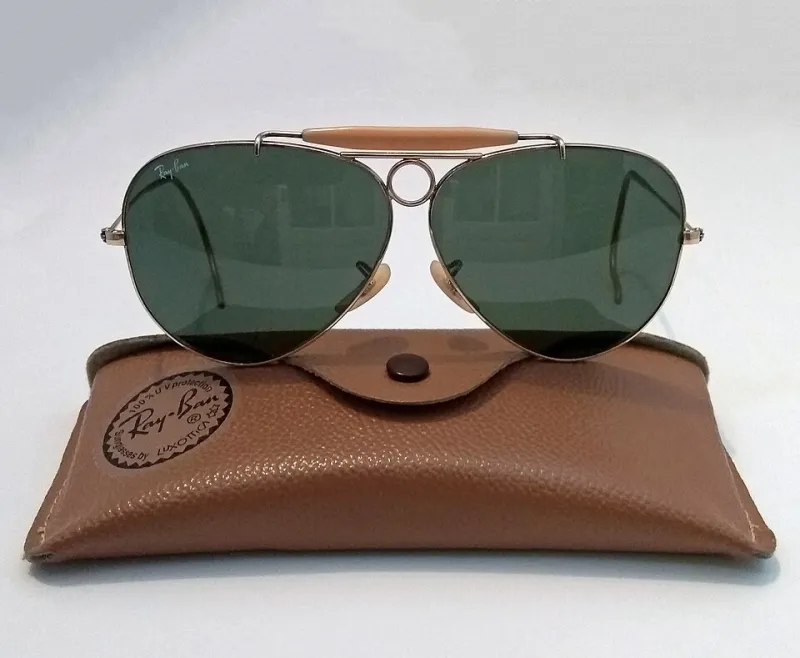
In SoCal, aviators are worn with a studied casualness. The goal is to look like you threw them on without thinking — even when the frame is a $400 pair of Ray-Ban Titanium or Oliver Peoples. Vintage and vintage-adjacent styles are particularly strong here, with small-lens, flat-bridge variations (think early 1970s proportions) popular among the creative and entertainment communities in neighborhoods like Silver Lake, Echo Park, and Venice.
Mirrored and photochromic lenses are common, driven by the region's extreme light variability — from overcast marine layer mornings to blazing afternoon sun within the same day.
The Pacific Northwest: Understated, Functional, Frequently Surprising
Seattle, Portland, and the broader Pacific Northwest present a fascinating aviator paradox. This is one of the cloudiest regions in the continental US — Seattle averages around 150 sunny days a year, compared to Phoenix's 300-plus. And yet aviators are genuinely popular here, worn with a characteristically Northwestern lack of fanfare.
The PNW aviator tends to be matte-finished rather than polished — black or gunmetal frames that don't scream for attention. Lens tints lean amber and yellow, which boost contrast in the region's frequently overcast or hazy conditions. Polarized lenses are almost universal among serious outdoor enthusiasts, who need glare control for kayaking, hiking, and skiing rather than beach lounging.
There's also a strong outdoor-brand crossover in this region. Companies like Oakley and Smith Optics, while not traditional aviator brands, have influenced the functional-first approach to eyewear that PNW consumers bring even to classic styles. When a Seattleite picks up a pair of aviators, they're likely thinking about lens performance alongside aesthetics in a way that a Miami buyer might not.
The Mountain West: Altitude, UV, and a Certain Rugged Elegance
Colorado, Utah, Wyoming, and Montana have their own aviator personality shaped by two dominant forces: altitude and outdoor culture. At elevation, UV radiation increases by roughly 10% for every 1,000 feet gained. Denver sits at 5,280 feet. Many popular ski resorts push past 10,000 feet. UV protection isn't an abstract concern here — it's a practical one.
This drives demand for aviators with legitimate UV400 protection and high-quality lens materials. Polarization is near-mandatory for anyone spending time on snow. The region also shows strong preference for wraparound-adjacent designs — aviators with a slight curve that provides a bit more peripheral coverage than flat-lens styles.
Style-wise, the Mountain West blends Western heritage with outdoor-tech aesthetics. Tortoiseshell frames with amber lenses show up alongside matte black frames with mirrored silver. There's a rugged elegance to the look — aviators that feel at home on a chairlift but could also work at a ranch dinner.
The Midwest: Practical First, Stylish Second
The heartland's relationship with aviators is refreshingly straightforward. In states like Ohio, Illinois, Michigan, and Minnesota, sunglasses are purchased primarily for function — managing the intense summer glare that comes off flat, open landscapes and Great Lakes water. Aviators sell well here because they work, not because they're fashionable.
That said, Midwest aviator culture has been quietly shaped by agricultural and automotive industries. The no-nonsense, durable aesthetic that defines much of Midwestern fashion sensibility translates into a preference for classic, unfussy frames — black, gunmetal, silver — over trendy finishes or statement colors. Polarized lenses are popular with boaters and fishermen on the Great Lakes and Mississippi River systems.
Chicago is the regional outlier, with a more fashion-forward aviator culture that reflects its status as a major metro with strong style credentials. The city's notoriously bright winter glare — sun bouncing off snow and glass skyscrapers — creates year-round demand that keeps aviators in the rotation even during cold months.
The Northeast: Seasonal, Sophisticated, and a Little Self-Conscious
New York City and the broader Northeast corridor treat aviators with a certain metropolitan thoughtfulness. This is a region where fashion is taken seriously and where being seen wearing the wrong thing at the wrong time carries genuine social weight.
Northeast aviator culture tends toward the refined end of the spectrum — slim metal frames, classic proportions, quality materials. Ray-Ban's classic RB3025 in gold or silver is practically a New York uniform. Vintage frames — genuine vintage, sourced from estate sales and specialty shops — carry particular cachet in the city's fashion-conscious communities.
The seasonal nature of Northeast sunshine means aviators are worn more deliberately here than in the Sun Belt. Summer weekends in the Hamptons or Cape Cod, early spring days in Central Park, fall afternoons in Boston — the aviator appears at specific, photogenic moments rather than as daily workwear.
What the Regional Map Tells Us
America's aviator geography reveals something interesting about the frame's enduring appeal: it's flexible enough to absorb wildly different cultural contexts without losing its essential identity. A Montana rancher and a Manhattan creative director can both reach for an aviator and have the choice make complete sense within their respective worlds. That's a rare quality in fashion, and it's a big part of why the teardrop frame has never really gone out of style — it just keeps finding new homes.