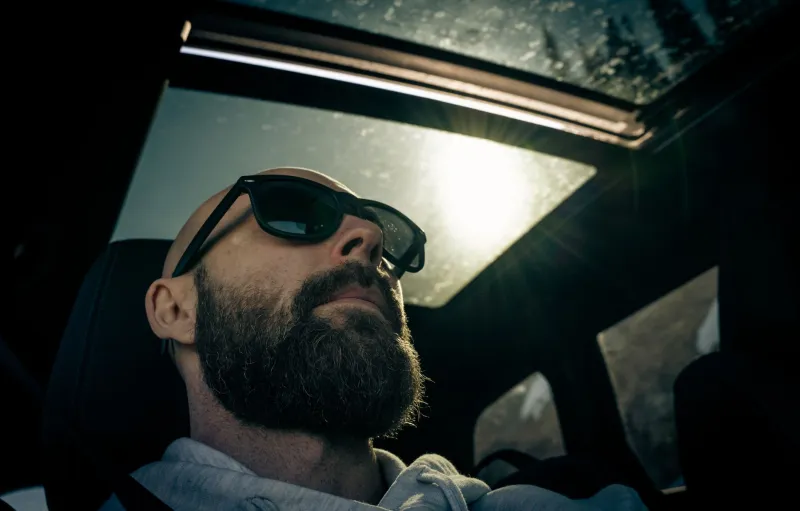
Price Tag vs. Protection: The Surprising Truth About UV Ratings in Aviator Sunglasses
There's a quiet assumption baked into the way most of us shop for aviator sunglasses: if you pay more, you get more. Better materials, better build, better protection. It's a reasonable assumption. It's also, in a lot of cases, flat-out wrong.
When it comes to UV protection specifically — the single most important health function a pair of sunglasses can perform — price and performance have a surprisingly loose relationship. Some of the best UV-blocking lenses on the market come attached to frames that cost less than a tank of gas. And some designer aviators, the ones with the luxury branding and the velvet pouches, barely clear the minimum bar.
Let's break down why that happens, what to actually look for, and how to make sure your aviators are doing their job — regardless of what you paid for them.
What UV Protection Actually Means (And What It Doesn't)
First, a quick science primer. Ultraviolet radiation comes in two flavors that matter for eye health: UVA and UVB. Prolonged exposure to both is linked to cataracts, macular degeneration, and photokeratitis — basically a sunburn on your cornea. Not fun.
The gold standard for sunglass lenses in the US is 100% UV400 protection, which means the lens blocks all light up to 400 nanometers in wavelength, covering both UVA and UVB entirely. The American Optometric Association endorses this standard, and it's what you should be looking for on any pair of sunglasses you buy.
Here's the catch: UV protection is determined almost entirely by the lens material and coating, not by lens color, darkness, or price. A pale yellow lens with the right UV-absorbing polymer can outperform a dark, dramatic lens that hasn't been properly treated. This is where a lot of shoppers get tripped up — and where brands sometimes exploit the confusion.
Why Budget Aviators Can Actually Hold Their Own
Polycarbonate lenses — the material used in the vast majority of budget and mid-range aviators — inherently block UV radiation as part of their molecular structure. You don't need an additional coating to get UV400 protection with polycarbonate; it's baked in. That's one reason why a $30 pair of aviators from a reputable brand can genuinely offer the same UV protection as a $300 pair.
Brands like Sungait, WearMe Pro, and several private-label options on Amazon have been independently tested and verified at UV400 levels. The Federal Trade Commission requires that any UV protection claims on sunglasses sold in the US be truthful, which creates at least a baseline of accountability — though enforcement is imperfect.
The takeaway? When a budget brand slaps "UV400" on the label and that claim has been tested, you can largely take it at face value for eye protection purposes.
Where Luxury Brands Sometimes Fall Short
This is the uncomfortable part. A handful of high-end and fashion-forward aviator brands — particularly those where the emphasis is on aesthetics, heritage, or celebrity endorsement — have faced scrutiny over the years for UV protection that doesn't match the price point.
The issue usually comes down to specialty lens materials. Some luxury frames use glass lenses, gradient lenses, or fashion-forward tints that prioritize look over function. Glass lenses can be UV-treated, but the treatment is a separate step — and if it's skimped on, the lens won't perform at UV400 levels even if the rest of the frame is impeccable.
Gradient lenses, popular in classic aviator styling, are particularly worth scrutinizing. The lighter portion at the bottom of the lens may have significantly weaker UV blocking than the darker top. This matters because UV radiation bounces off surfaces like water, pavement, and car hoods — often hitting your eyes from below.
The lesson isn't that luxury brands are scamming you. Most reputable ones — Ray-Ban, Maui Jim, Randolph Engineering — are rigorous about their UV standards. But "luxury" alone isn't a proxy for eye safety, and you shouldn't assume it is.
How to Actually Evaluate a Pair of Aviators for UV Protection
So what should you do? Here's a practical checklist that works whether you're buying a $40 pair at a boutique or dropping $450 at a department store.
1. Look for the UV400 label — and verify it. Don't just glance at the tag. Look for explicit "UV400" or "100% UV protection" language. If a pair only says "UV protection" without specifying the level, that's a yellow flag.
2. Ask about the lens material. Polycarbonate and Trivex lenses offer inherent UV protection. Glass and acetate lenses require applied UV coatings — not a dealbreaker, but worth confirming.
3. Be skeptical of darkness as a proxy. A dark lens without UV treatment is actually worse than a clear lens, because your pupils dilate in the shade, letting in more radiation. Darkness is aesthetic; UV protection is chemical.
4. Check for third-party testing or certification. Some brands voluntarily submit lenses for independent testing. The American National Standards Institute (ANSI) Z80.3 standard is the benchmark for the US market. Brands that reference this standard are generally more trustworthy on UV claims.
5. For gradient lenses, ask specifically about the lighter portion. If a brand can't tell you whether the full lens surface meets UV400 — not just the darkest part — that's worth knowing before you buy.
The Polarization Confusion
One more thing worth clearing up: polarization and UV protection are not the same thing. Polarized lenses reduce glare from reflective surfaces, which is genuinely useful for driving, fishing, or spending time near water. But polarization says nothing about UV blocking.
A polarized lens without UV400 treatment will cut glare while doing essentially nothing for your long-term eye health. Conversely, a non-polarized lens can have perfect UV400 protection. The two features are independent, and conflating them is one of the most common misunderstandings in sunglass shopping.
When you're evaluating aviators, look for both — but understand that UV protection is the non-negotiable health requirement, while polarization is a valuable but separate upgrade.
The Bottom Line
Here at Aviator Sunglasses US, we love a great-looking pair of frames as much as anyone. The sweep of a classic teardrop lens, the flash of a gold wire frame — that stuff matters, and we're not going to pretend otherwise. But style and safety aren't in competition, and you don't have to sacrifice one for the other.
What you do have to do is stop letting price be your shortcut for evaluating eye protection. A $35 pair with verified UV400 polycarbonate lenses is protecting your eyes. A $350 pair with an untreated glass gradient lens might not be. The only way to know is to ask the right questions — and now you know exactly what those are.