Sharper Mind, Clearer World: The Science of How the Right Aviators Actually Boost Your Performance
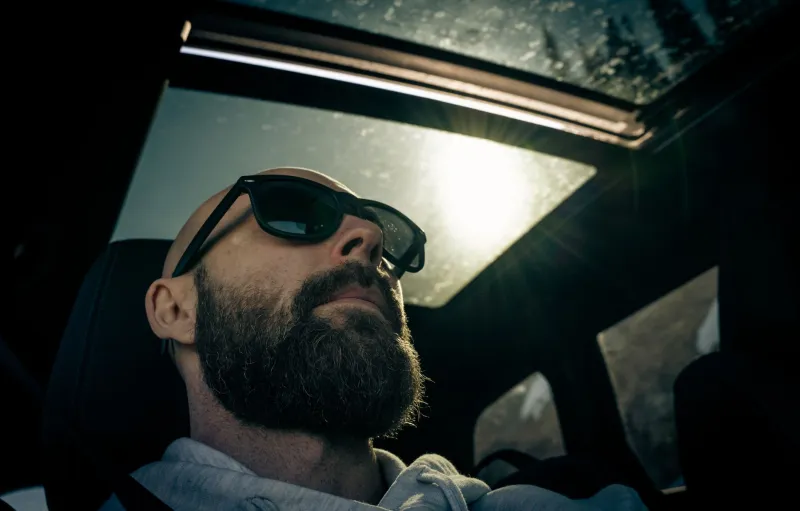
Most of us grab a pair of aviators because they look good. And honestly? That's reason enough. But there's a growing body of research suggesting that the right sunglasses — specifically the lens quality, UV protection level, and physical fit — can do something genuinely surprising: make your brain work better.
This isn't wellness-influencer hype. We're talking about real cognitive science, ophthalmology research, and sports performance data that point to a pretty compelling conclusion. When your eyes are properly protected and visually comfortable, your brain gets to stop playing defense and start playing offense.
Let's break it down.
Your Eyes Are Eating Up Brain Power (More Than You Realize)
Here's something most people don't think about: vision is the most cognitively expensive sense you have. Roughly 30% of your brain's cortex is dedicated to processing visual information. When the visual environment is stressful — too bright, too glary, too much contrast — your brain has to work overtime just to make sense of what you're seeing.
That extra processing load has a cost. Research from the field of cognitive load theory shows that when your brain is busy managing sensory strain, it has fewer resources available for higher-order tasks like decision-making, focus, and memory. In plain terms: squinting into the sun while driving through Phoenix in July isn't just uncomfortable — it's literally taking mental bandwidth away from your reaction time and judgment.
Quality aviator lenses — especially those with full UV400 protection and optical-grade clarity — reduce that sensory noise dramatically. Your eyes stop working so hard, and your brain gets to redirect those resources toward actually thinking.
Glare Isn't Just Annoying — It's a Cognitive Disruptor
Let's talk about glare specifically, because this is where aviators have a built-in advantage. The classic teardrop lens shape wasn't designed for aesthetics first — it was engineered to maximize coverage across the visual field, which is exactly what pilots needed when scanning instrument panels and horizons at altitude.
Glare — particularly the kind bouncing off pavement, water, or car hoods — triggers what researchers call "discomfort glare" and "disability glare." Discomfort glare causes eye strain and fatigue. Disability glare actually impairs your ability to see detail. Both types activate a stress response in the visual cortex, which cascades into the broader nervous system.
Here's where polarized lenses come in. A polarized aviator lens filters out horizontally reflected light waves before they reach your eye, effectively eliminating most road and water glare. Studies on drivers wearing polarized lenses show measurably faster hazard detection times compared to drivers in non-polarized lenses or no sunglasses at all. For anyone spending serious time behind the wheel — commuters, long-haul drivers, road-trippers cutting across I-40 — that's not a trivial upgrade.
The Fit Factor: Why a Sloppy Frame Undermines Everything
Here's one that doesn't get nearly enough attention: fit. A pair of aviators that sits too low on your nose, gaps at the temples, or lets light flood in from the sides is essentially a leaky shield. Your brain still has to contend with unfiltered light entering from the periphery, which means the glare-reduction benefits of your lenses are only partially realized.
Beyond the optical issue, poor fit creates physical distraction. Frames that pinch, slide, or press unevenly on your nose bridge introduce a low-level discomfort signal that your nervous system has to continuously process. It's subtle, but it adds up — especially during long drives, outdoor workouts, or high-stakes professional situations where sustained focus matters.
A well-fitted aviator frame should sit firmly without pressure points, align the optical center of the lens with your pupil, and create a seal close enough to block peripheral light without full wraparound coverage. Getting fitted properly at an optician or choosing a brand that offers multiple bridge and temple configurations isn't vanity — it's performance optimization.
Athletes Already Know This — The Rest of Us Are Catching Up
Professional athletes have been treating eyewear as performance equipment for decades. Cyclists, golfers, baseball players, and tennis pros all work with sports vision specialists who dial in lens tint, contrast enhancement, and coverage specifics for their particular visual environment.
Aviators, with their wide lens area and close-to-face profile, translate surprisingly well to athletic contexts. Brown and amber-tinted lenses increase contrast on variable terrain — useful for trail runners or cyclists navigating changing light conditions. Gray lenses maintain true color perception, which matters for ball-sport athletes tracking fast-moving objects.
Beyond sport, the same principles apply to any professional who operates in visually demanding environments: surgeons doing outdoor procedures, construction site managers, real estate agents doing property walkthroughs on bright Texas afternoons. When your visual environment is optimized, your mental performance follows.
UV Protection and the Long Game
There's also a longer-term cognitive angle worth mentioning. Chronic UV exposure to unprotected eyes is linked to the development of cataracts and macular degeneration — conditions that don't just impair vision but have been associated in recent research with increased risk of cognitive decline in older adults. The visual system and the brain are not separate systems; damage to one ripples into the other over time.
UV400 protection — the standard you should be looking for in any aviator worth buying — blocks 99-100% of both UVA and UVB radiation. It's the baseline, not a premium feature. If a pair of aviators doesn't specify UV400 protection, that's a dealbreaker regardless of how good they look.
Making the Smart Buy
So what does all this mean when you're actually shopping? It means treating lens quality as non-negotiable. Optical-grade glass or high-quality polycarbonate lenses with UV400 protection and — ideally — polarization aren't just upsells. They're the features doing the actual cognitive work.
Fit is equally important, and worth the extra time to get right. If you're buying online, look for brands with clear sizing guides and return policies that let you test the fit in real conditions.
And style? That's still very much part of the equation. Because here's the thing — when you feel good in what you're wearing, your confidence goes up, your posture improves, and yes, research backs up the idea that self-perception influences actual performance. The "enclothed cognition" effect is real: what you wear changes how you think and behave.
Aviators have been making people feel sharp and capable since the 1930s. Turns out, they might actually be making you sharper and more capable too.
That's a pretty solid return on a pair of sunglasses.
